
 Suomi
 Français
 Deutsch
 Polski
Client and industry
A manufacturer of water-treatment solutions receives customer order requests through email and in PDF, Word, Excel, and plain-text files. Time-sensitive deliveries require the team to turn varied requests into structured Salesforce data for quote preparation and order processing. The customer already had an Azure subscription and had relied on Azure services for years, providing an established environment for the AI integration.
This was a follow-on engagement for the same customer as our earlier Sales Cloud and Field Service implementation for a water-treatment manufacturer. The customer returned to Routine Automation to extend its quotation workflow with AI-assisted request processing, product matching, and validation.
The challenge
Inconsistent formats and layouts
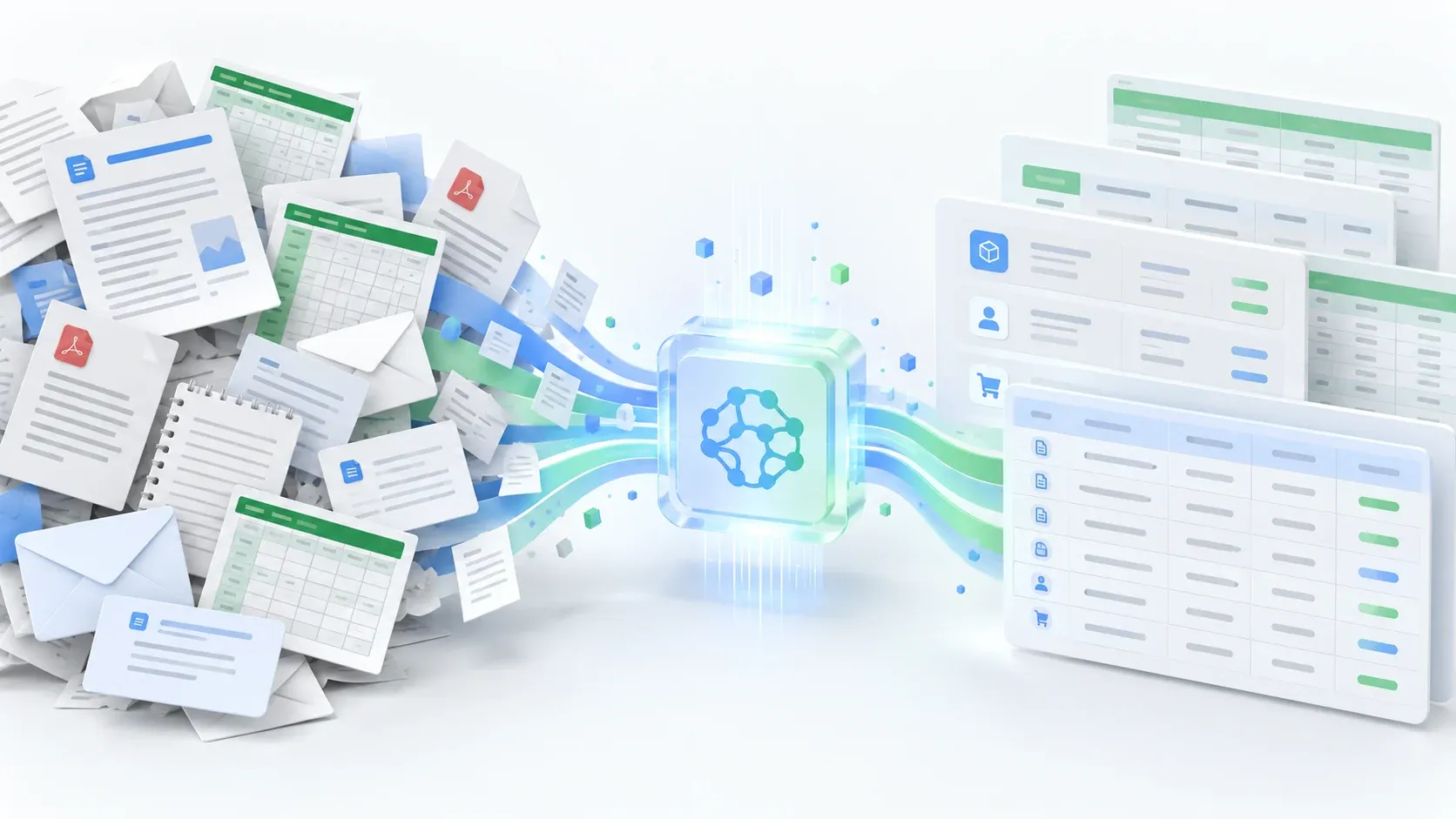
Customer requests arrive as PDFs, Word documents, Excel spreadsheets, plain text, and email content. Varied layouts make template-based extraction difficult to maintain and leave staff interpreting the same information in different forms.
Manual order transcription
Employees spent approximately 30 minutes per order manually transferring all the data from a PDF before they could continue with order preparation.
Requests waiting for manual processing
When each document requires individual inspection and transcription, incoming requests can be left waiting, putting time-sensitive order preparation at risk.
Time-consuming quote preparation
Turning a request into a Salesforce quote required more than extracting text: employees had to organize requirements and assemble the quotation, adding substantial preparation time.
Finding relevant quotations and suitable products
Quote preparation also required finding similar past quotations and matching products to the customer’s request and specifications. This research added work beyond transcription and made product selection an additional point to verify.
Our solution
Routine Automation connected Salesforce Service Cloud with Azure OpenAI and built the supporting infrastructure for quotation lookup, product matching, and validation. The customer already held an Azure subscription and had long used Azure services, so this architecture extended its existing environment. Apex, Visualforce, and Azure Functions connect request processing with Salesforce quotation workflows.
Capture the request
Salesforce Email-to-Case receives customer messages and attachments, bringing PDF, Word, Excel, plain-text, and email requests into the intake workflow.
Categorize and structure the information
AI services interpret the request and extract order details and customer specifications into structured data for automatic ingestion into Salesforce.
Find relevant quotation and product context
the lookup infrastructure retrieves similar quotations and searches for products matching the customer’s requirements and specifications, supporting quotation preparation with relevant commercial context.
Similar quotations: retrieve relevant previous quotes.
Product lookup: match products to customer requests and specifications.
Create the Salesforce quote
the workflow uses the structured request, similar quotations, and product matches to create the quotation under the existing business rules. Employees can inspect and correct the ingested request information.
Validate the quotation
a validation layer checks the created quote for accuracy before it proceeds. The same established business rules apply across different input formats.
Validated quotation
The validated quotation proceeds to downstream preparation.
Human quality approval
when validation flags a possible error, the quotation is escalated to the human quality approval team for review and approval. A flagged quote must pass this review before proceeding.
After approval → downstream preparation
After validation and any required quality approval, the quotation is passed to a third-party system through an XML integration for downstream order processing.
Business Results
The implementation connects request ingestion, similar-quotation retrieval, product matching, quote creation, and validation in Salesforce. Possible errors are escalated to the human quality approval team, and validated quotations are passed to a third-party system for downstream order processing. Reported data-extraction accuracy is approximately 99%; this figure does not measure end-to-end quotation accuracy.
Automatic ingestion across formats
PDF, Word, Excel, text, and email requests become structured Salesforce data, reducing repeated manual entry.
Relevant quotation and product context
Similar quotations and product lookup support matching the customer’s requirements to suitable products, reducing manual research during quote preparation.
Connected quotation preparation
Structured requirements and retrieved context support quote creation within the same workflow, streamlining the path from customer request to quotation.
Validation with human quality approval
The validation layer checks quote accuracy and escalates possible errors to the quality approval team before flagged quotations proceed.
Consistent request handling
Requests follow the same existing business rules despite inconsistent document layouts, reducing dependence on manual interpretation.
From 30 minutes to less than 5 minutes per order
Before the implementation, manually transferring all the data from a PDF took approximately 30 minutes per order. With AI assistance, filling in, editing, and validating an order takes less than 5 minutes, reducing the time spent preparing each order.